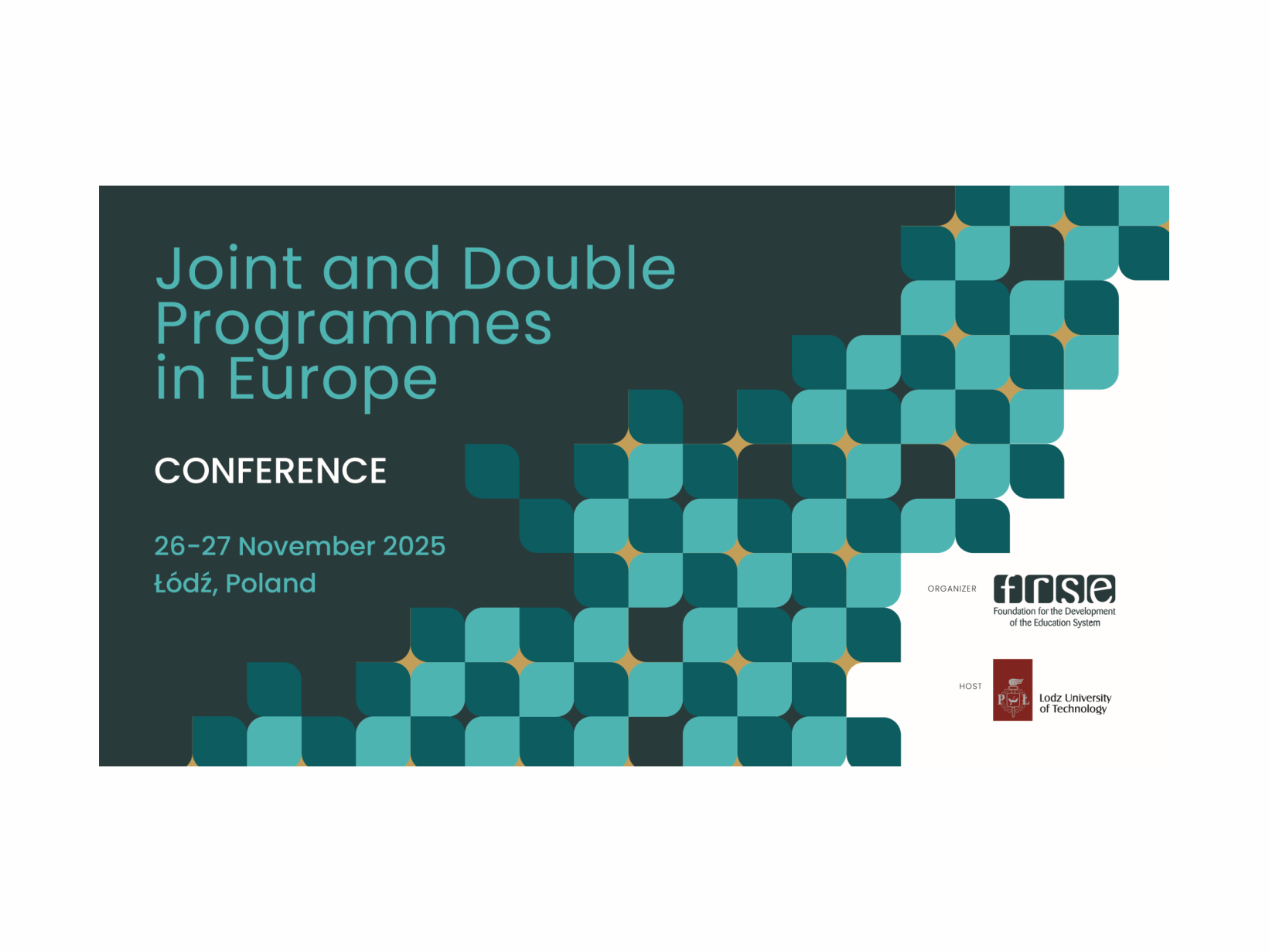
For two days in November, Lodz will become the European capital for discussions about joint and double degree programs that allow obtaining one diploma recognized simultaneously in several countries. This solution may change the way of studying throughout the European Union in coming years and significantly impact the labour market, youth mobility, and university competitiveness.
European higher education has undergone dynamic transformation in recent years. The Bologna Process and programs like Erasmus+ have changed the academic environment by supporting student and staff mobility and standardizing education systems. Flexible learning paths, micro-credentials, qualification recognition, and mobility of students and academic staff are gaining increasing importance. Joint and double degree programmes are a tool that opens career opportunities across Europe, enhances university competitiveness, and meets labour market needs. At the same time, they require cooperation among countries regarding programs, legal regulations, qualification recognition, and quality assurance.
The conference "Joint and Double Programmes in Europe" was prepared in cooperation with institutions from France, Germany, and Spain — three countries with the largest number of European universities playing a leading role in developing joint degree programmes.
Confirmed participants include representatives from:
- The European Commission
- Embassies of partner countries
- Government administrations of Poland and France
- Accreditation bodies from Poland, Germany, France, EQAR (European Quality Assurance Register for Higher Education)
- Academic Cooperation Association (a think tank active in international higher education cooperation representing 23 European organizations)
- Universities and institutions from Italy, Belgium, Ireland, Czech Republic, Germany, and France
The conference continues activities under the Polish Presidency of the EU Council, including work on the European Joint Diploma initiative, which may significantly change study methods and qualification recognition across the Union in the near future. Poland and its universities are increasingly marking their presence in the European education debate, contributing to solutions that could become standard in upcoming years.
As part of the event, the international competition "Co-Create to Educate: International Collaboration Award" recognizes the most inspiring, innovative, and creative educational initiatives developed through international cooperation. The best projects will be presented during the conference and evaluated by an international expert jury. The competition aims not only to highlight good practices but also to promote international collaboration in higher education and inspire universities and institutions to create innovative and engaging educational projects.
Thanks to the involvement of Lodz University of Technology, Lodz becomes a place to discuss how universities can genuinely influence students' futures and labour market development. The conference will show that joint and double diplomas are not just prestigious but concrete tools opening career pathways across Europe, including for Polish students.
More details about the conference and online stream access are available on the website.