
Forbes magazine has announced its list of 25 women leaders in AI. Among this distinguished group is Prof. Anna Fabijańska from the Faculty of Electrical, Electronic, Computer and Control Engineering at Lodz University of Technology.
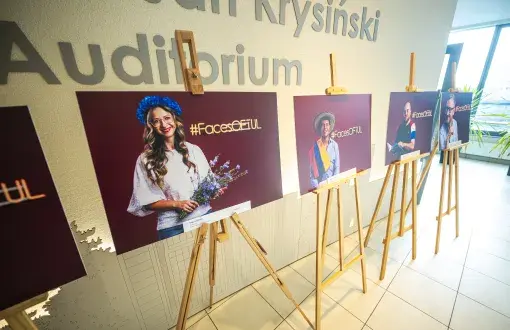
13 protagonists, dozens of remarkable stories and an abundance of positive energy! Today, at the International Cooperation Centre, we introduced the protagonists of #FacesOfTUL, a new podcast series by Lodz University of Technology!
Lodz University of Technology has been included in the Best Universities in the World 2026 ranking compiled by Research.com. The University achieved a particularly high position in Mechanical and Aerospace Engineering, ranking 2nd in Poland and 313th worldwide.
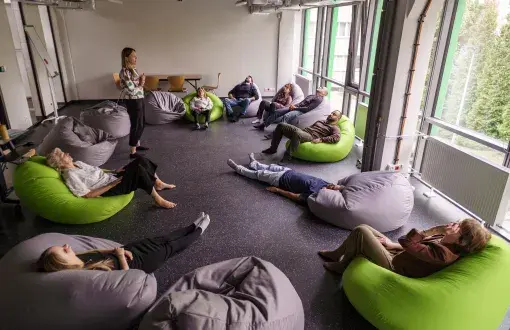
Virtual reality applications, a mobile app featuring exercises for difficult moments, and university-wide training - all this will be delivered by CalmCampus, a new international project at Lodz University of Technology. Its aim is to support the mental health of students and staff. The project was launched with a partner meeting held in Lodz on 19–20 October.

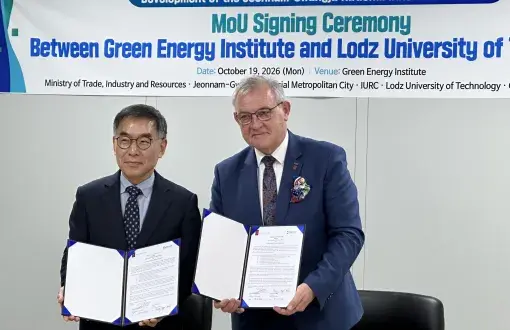
On 19 October 2026 in Mokpo, South Korea, the Rector of Lodz University of Technology, Prof. Krzysztof Jóźwik, and the President of the Green Energy Institute, Dr Gyou-Cheol Hwang, signed a memorandum of cooperation. The agreement runs for five years and covers joint research in energy, the development of energy technologies, and cooperation with industry. The signing opened a study visit by a delegation from the Łódzkie Region to Jeollanam Province.
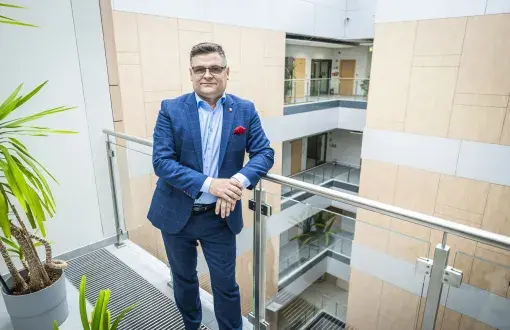
Industry, medicine and sustainable development are today the driving forces in science and in the education of engineers. Prof. Jacek Sawicki Dean of the Faculty of Mechanical Engineering, talks about cooperation with external partners and the challenges of teaching.
Why does the economy go through periods of rapid growth followed by a slowdown or recession? How can economic policy mitigate the effects of such fluctuations? These questions are addressed by the research recognised with this year’s Sveriges Riksbank Prize in Economic Sciences in Memory of Alfred Nobel.
56 researchers from Lodz University of Technology have been included in the latest ranking of the world’s Top 2% most influential scientists. Compiled by a team from Stanford University in collaboration with Elsevier, the ranking is one of the world’s most prestigious and important tools for assessing scientific achievement.
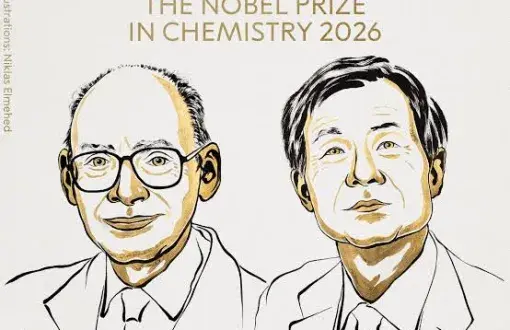
Commentary by Professor Łukasz Albrecht of the Institute of Organic Chemistry on the 2026 Nobel Prize in Chemistry, awarded to Henri B. Kagan and Kenso Soai “for the discovery of nonlinear effects and autocatalysis in asymmetric organic synthesis”.
The 2026 Nobel Prize in Physics was awarded to Francis Halzen, a Belgian-born scientist working at the University of Wisconsin–Madison in the United States. The prize was awarded for his “decisive contribution to the creation of the IceCube Neutrino Observatory and the discovery of high-energy neutrinos of astrophysical origin”.
Applications for the 19th edition of the competition for academic scholarships from the TUL Own Scholarship Fund for the year 2027 can be submitted until November 6.
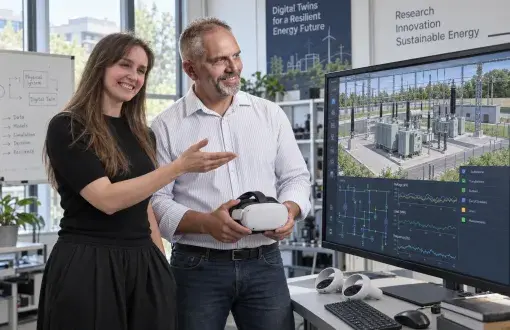
Lodz University of Technology, together with O.M. Beketov National University of Urban Economy in Kharkiv, is carrying out the TWIN-SEC project, which aims to improve the security and resilience of power grids against hybrid threats. The project is funded under NATO’s Science for Peace and Security (SPS) Programme and has a budget of EUR 238,000.
The latest results of the University Ranking by Academic Performance (URAP) Field-Based Ranking, which evaluates universities’ scientific achievements in individual fields, have been published. Lodz University of Technology was ranked in 15 fields, achieving its best result in Polymer Science, where it was placed 223rd in the world as the only university from Poland included in this ranking.
How can people be interested in science in a world full of information, short-form content and constant competition for audiences’ attention? Professor Edyta Gendaszewska-Darmach, Dean of the Faculty of Biotechnology and Food Sciences at Łódź University of Technology, talks about the role of scientists in building trust in knowledge, ways of reaching different audience groups, and why science communication is as important as research itself.
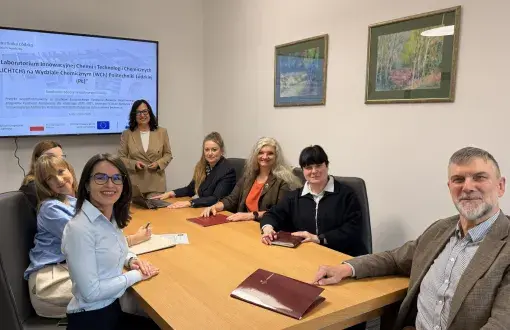
The Faculty of Chemistry has received more than PLN 13.8 million from European Funds to establish the modern Laboratory of Innovative Chemistry and Chemical Technologies (LICHTCH). The total value of the project exceeds PLN 21 million. The new research infrastructure is intended to support the development of innovative technologies and cooperation between science and businesses from the Łódź region.