

Project Consortium and Funding
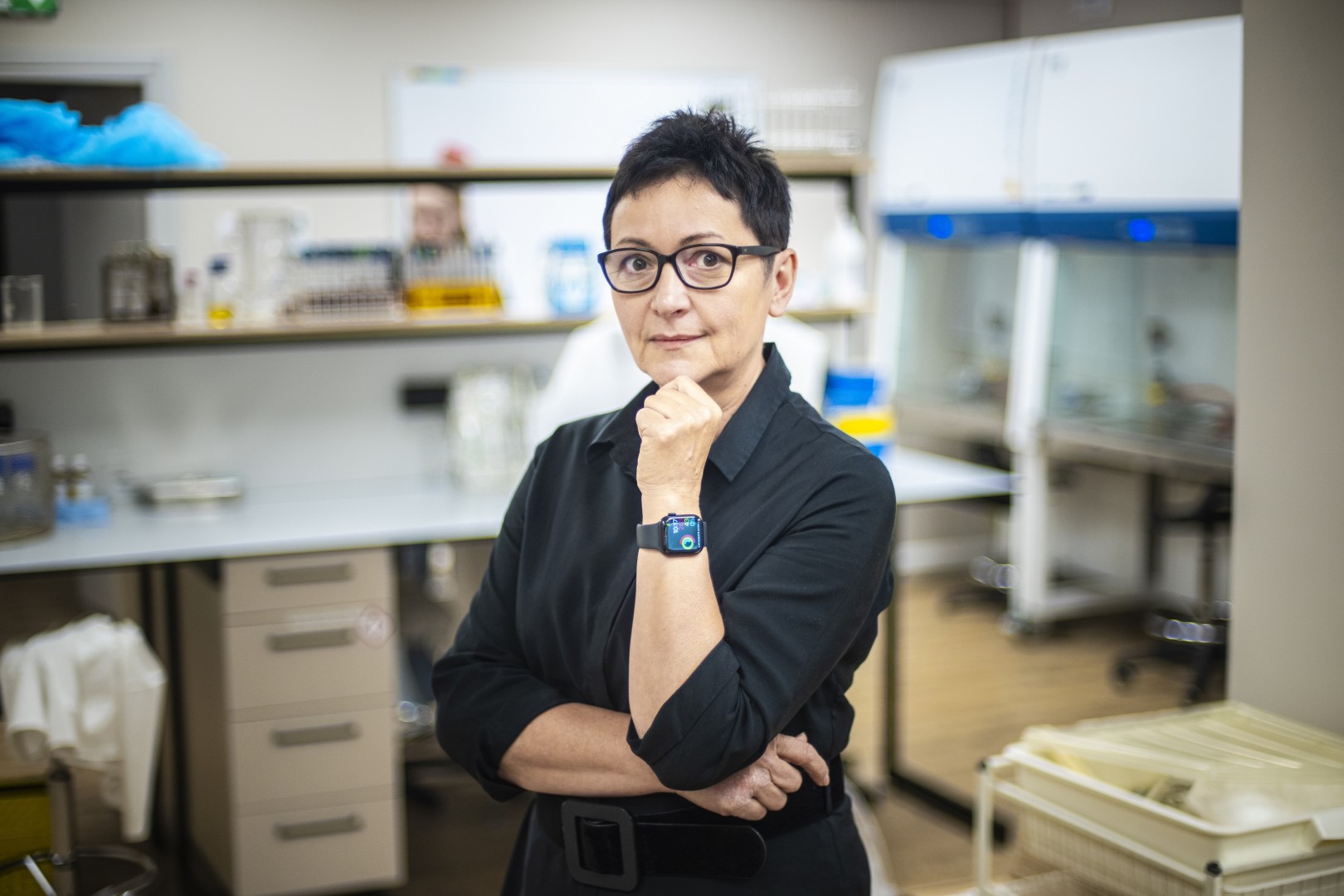
The project is carried out by a consortium led by Maspex Food Sp. z o.o., with Lodz University of Technology as the scientific partner. On the university’s side, the project is implemented by the Department of Environmental Biotechnology at the Faculty of Biotechnology and Food Sciences. The research and development work is conducted by a team specializing in biotechnology, microbiology, fermentation processes, and food quality assessment. The project at TUL is led by Ilona Motyl, PhD. It will run from 1 July 2026 to 30 June 2029.
The total project value is PLN 21.58 million, including PLN 8.53 million in funding. Lodz University of Technology has been allocated PLN 1.74 million for its research, including PLN 1.69 million in funding.
Responding to Functional Food Market Needs
The aim of the project is to develop a new category of functional semi-finished products for the food industry—fermented vegetable bases with prebiotic and postbiotic properties. The solution aligns with current trends in food technology and food biotechnology, focusing on natural products that are microbiologically stable, offer enhanced health benefits, and can be used in industrial food production.
These semi-finished products will be used in the B2B sector as ingredients in dairy products, sauces, ready meals, snacks, and other food products. They will be applied wherever nutritional value, sensory quality, product stability, and the use of plant-based ingredients are important. The project supports the development of functional foods, fermentation technologies, and efficient use of vegetable raw materials.
Product Innovation
The main objective is to develop innovative vegetable-based semi-finished products and their production technology. The products will be stable, microbiologically safe, and obtained through fermentation with the addition of ingredients with prebiotic potential.
An important element will also be the presence of a postbiotic fraction—substances produced during fermentation that may enhance the product’s functional value.
Process Innovation
Process innovation includes developing technologies for fermentation, concentration, stabilization, and packaging that preserve product quality, bioactive properties, and functionality. The goal is to limit the degradation of bioactive compounds, ensure consistent product quality, and create a solution that can be scaled and implemented at an industrial level.
Role of Lodz University of Technology
The university’s role focuses on conducting research and development that forms the scientific foundation of the technology. Work at the Department of Environmental Biotechnology includes laboratory development and evaluation of vegetable fermentation processes, selection of technological parameters, and analysis of the properties of the resulting semi-finished products. Special attention will be given to assessing how factors such as raw material type, degree of processing, fermentation conditions, and the addition of prebiotic ingredients affect the process and the quality of final products.
Research will include evaluation of microbiological, physicochemical, and functional properties. Parameters related to microbiological stability, product safety, fermentation profile, and prebiotic and postbiotic potential will be analyzed. An important aspect will also be studying fermentation under non-standard conditions, including reduced temperatures and limited salt addition.
Scientific Significance and Implementation Potential
The project will contribute to the development of food biotechnology, particularly in the use of controlled fermentation processes to create products with defined functional properties. The research will improve understanding of the role of microorganisms in vegetable fermentation and how process conditions influence fermentation metabolites and functional potential.
The project also includes evaluating the use of fermented vegetable bases in synbiotic products, combining plant-based ingredients with selected microbial cultures. This will help determine their impact on microbial growth, survival, and the quality and functionality of final products.
Lodz University of Technology’s involvement is crucial for the scientific validation of effectiveness, stability, and safety. The results will support technology optimization and preparation for large-scale implementation. The expertise of the Department of Environmental Biotechnology complements the technological and implementation experience of the consortium leader.
The project will result in the development of a production technology for innovative fermented vegetable bases intended for use in functional foods. Collaboration between
Lodz University of Technology and Maspex Food Sp. z o.o. will enable the transition from laboratory research, through optimization and scaling, to industrial implementation.
The project will foster innovation in functional food and food biotechnology while strengthening cooperation between science and industry. It will expand the use of fermented vegetable raw materials as valuable food ingredients and address current market demands related to health-promoting foods, product quality improvement, and sustainable use of plant-based resources.
Ilona Motyl
Department of Environmental Biotechnology