
professor of civil engineering, geodesy and transport
priority research area: (Re)EnergyTech
Research achievements
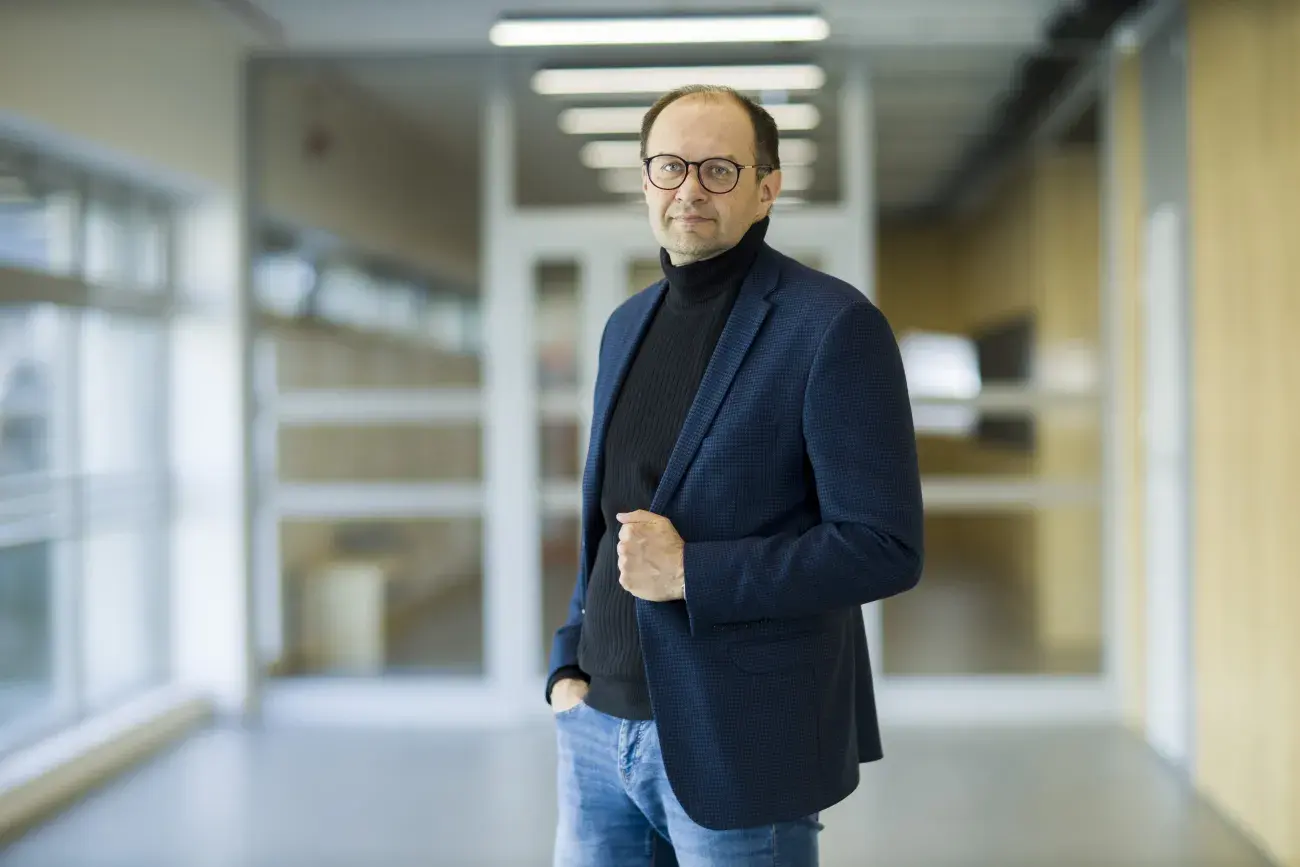
Professor Marcin Koniorczyk, PhD, DSc, Eng, from the Faculty of Civil, Architecture, and Environmental Engineering at Lodz University of Technology, specializes in civil engineering and building physics. His unique research approach stems from combining engineering with mathematical knowledge, supported by his doctorate in this field. He provides Lodz University of Technology with unique expertise in building life-cycle analysis (LCA) and energy optimization, strengthening the university’s position as a center setting standards for future, intelligent urban architecture.
Research profile and directions
Professor M. Koniorczyk’s work focuses on improving the energy efficiency of buildings and implementing technologies that enhance the durability of structures. In an era of climate challenges, his research on hydrophobic coatings that enhance the durability of concrete and advanced modeling of energy consumption in buildings (Building Energy Performance) directly support decarbonization strategies. The professor promotes an approach to engineering that combines mathematical precision with environmental care, pursuing a holistic approach to climate change, in which advanced materials engineering is the foundation of sustainable development.
Collaboration with industry, implementation and expertise
A significant element of the professor’s work is collaboration with industry, resulting in, among other things, obtaining patent no. 246138 for a method for producing a polypropylene additive for concrete and supervising implementation doctorates completed in collaboration with Atlas sp. z o.o. The professor’s achievements include strong international collaboration (internships in Stockholm, Prague, and Nantes) and active participation in renowned technical committees such as RILEM, as well as national scientific bodies, including the Committee on Building Physics at the Polish Academy of Sciences (KILiW PAN). The professor combines the needs of the local economy with international research trends, proving that energy optimization in buildings is an essential element of a fair economy of the future.