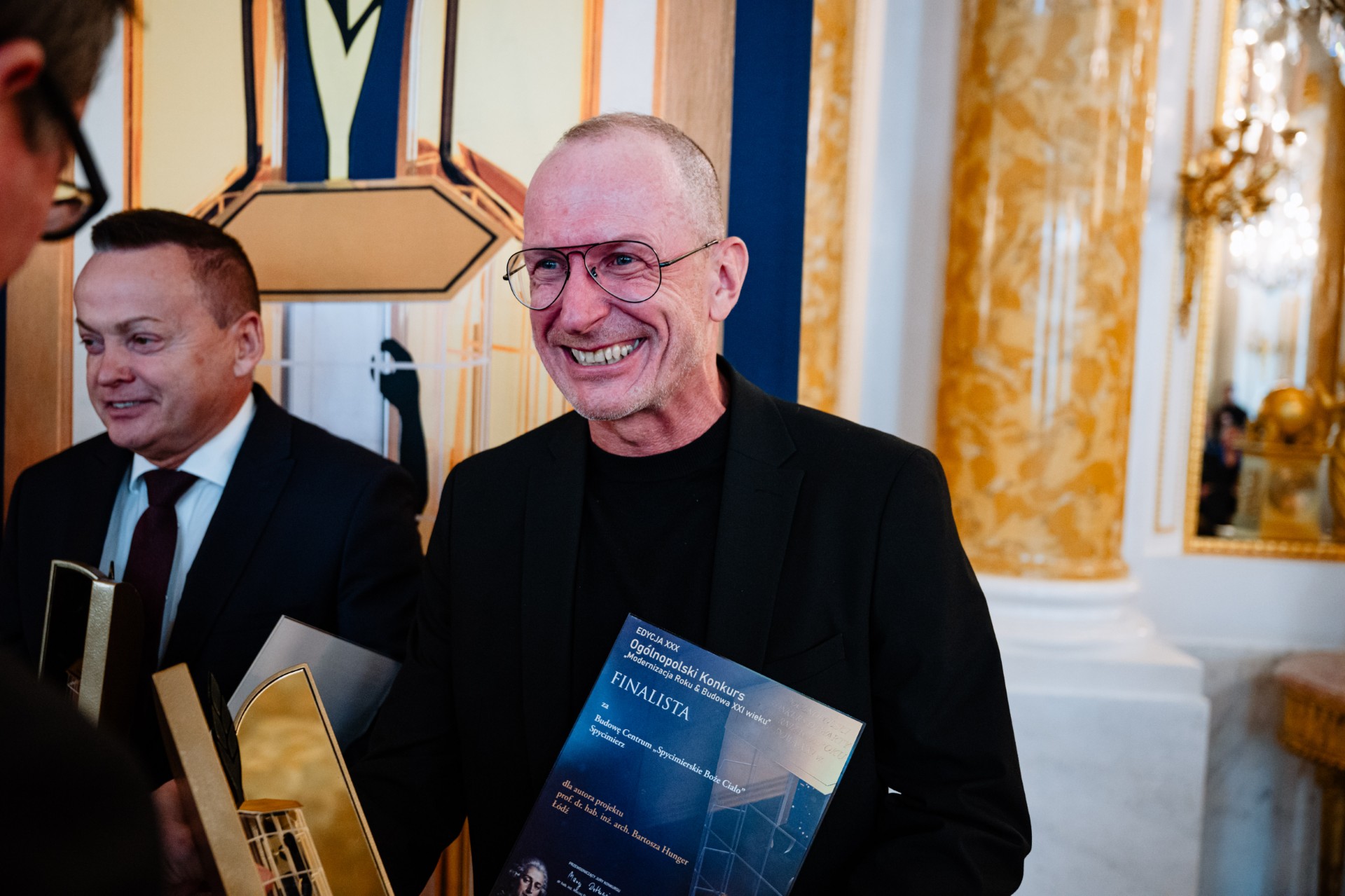
On 10 September 2026, at the Royal Castle in Warsaw, the Centre won the “Cultural Facilities” category in the 30th edition of the “Modernisation of the Year & 21st-Century Construction” competition.
On 15 October in Brussels, the Municipality of Uniejów received a New European Bauhaus Prize 2026 for its “Spycimierz Living Heritage Hub” project, winning in the “New European Bauhaus Boost for Small Municipalities” category. The award recognises initiatives that combine the three core values of the New European Bauhaus: beauty, sustainability, and accessibility and social inclusion.
Architecture shaped by its setting
The Centre is located in Spycimierz, a village near Uniejów with a history stretching back almost a thousand years. It is renowned for its tradition of creating floral carpets for Corpus Christi, which was inscribed on UNESCO’s intangible cultural heritage list in 2021.
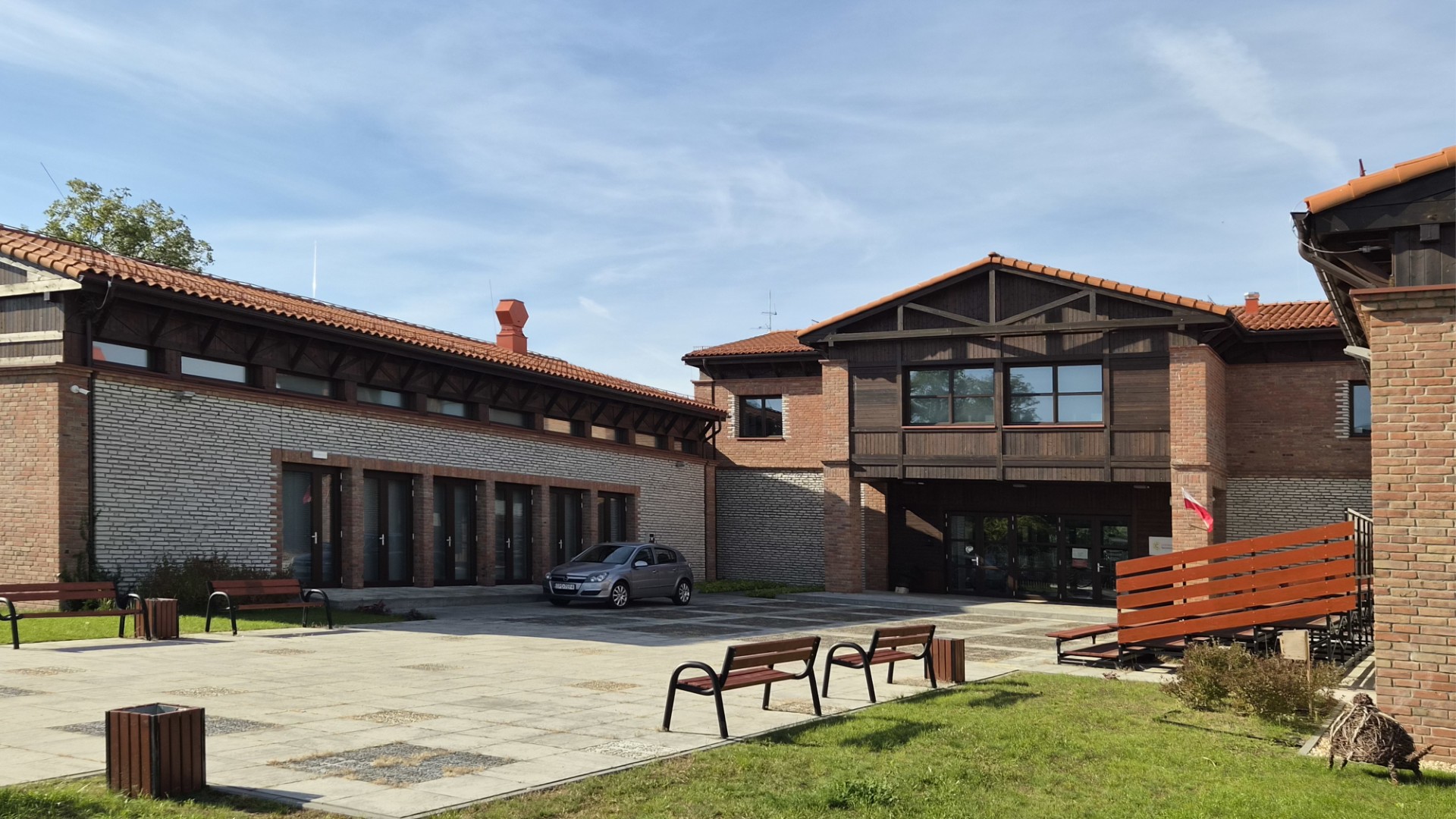
The Centre had to blend harmoniously with the village’s historic fabric, dominated by small houses and farm buildings, while preserving its character and identity. Professor Bartosz Hunger made the local context the guiding principle of his design, drawing on the village’s traditional architecture and spatial layout.
The building is divided into three sections connected by glazed passageways and arranged in a horseshoe configuration. This approach reduces its perceived scale and echoes the layout of traditional farmsteads. The Centre’s principal axis is also aligned with that of the neighbouring church, integrating the building into the village’s historic spatial structure.
Brick, local stone, timber and clay roof tiles, complemented by pitched roofs and traditional detailing, help the building sit harmoniously within the local landscape. Rather than reproducing historic buildings, the design creatively reinterprets their features, combining tradition with modernity and respect for the character of the place.
A modern centre for culture and community life
The Centre goes beyond the functions of a museum, combining heritage interpretation with education, community engagement and cultural activities. Exhibition galleries, educational and multipurpose spaces, multimedia displays and immersive installations introduce visitors to the history and symbolism of Spycimierz’s floral carpets.
Its flexible layout allows the building to serve residents and tourists throughout the year. Accessibility for people with disabilities and modern, energy-efficient building systems complete the vision of functional architecture rooted in local culture.
Architectural details
Local identity as a universal value
The European award highlights the potential of architecture created beyond major cities. The Spycimierz Centre demonstrates that a valuable design need not rely on spectacular forms or dominate its surroundings. Instead, its strengths can lie in local history, tradition, landscape and the genuine needs of residents.
Professor Bartosz Hunger’s design combines heritage conservation with contemporary needs. While respecting its historic context, it introduces new uses and enriches public space, creating opportunities for social and cultural development.
Two awards affirm the quality of the design
The combination of tradition and modernity has helped the project achieve success at both national and European levels. The “21st-Century Construction” title recognises its architectural and construction quality, while its success in the New European Bauhaus Prizes 2026 underlines its European significance as an example of architecture that combines aesthetics, sustainability, heritage conservation and social value.
The success of the Spycimierz Corpus Christi Centre is a shared achievement of the Municipality of Uniejów, the local community, everyone involved in delivering the project, and its architect, Professor Bartosz Hunger.
The Centre shows that architecture need not compete with history: it can creatively build on it, safeguard it and pass it on to future generations.