

CalmCampus will run for three years, from October 2026 to September 2029. It is funded under the Erasmus+ programme and has a budget of EUR 400,000. Lodz University of Technology is coordinating the project in cooperation with the Mindfulness Development Foundation from Poland, the University of Vigo in Spain, the University of Aveiro in Portugal, and A&A Emphasys Interactive Solutions Ltd from Cyprus.
Why Does It Matter?
An increasing number of young people are struggling with stress. There are many reasons for this, including pressure to achieve good academic results, information overload, difficulties in relationships, and uncertainty about the future. Recent worrying incidents in Polish schools, as well as in other countries, demonstrate how important it is to identify crises at an early stage and ensure that everyone knows where to seek help. This also applies to universities and to both their students and staff.
What Will Be Developed?
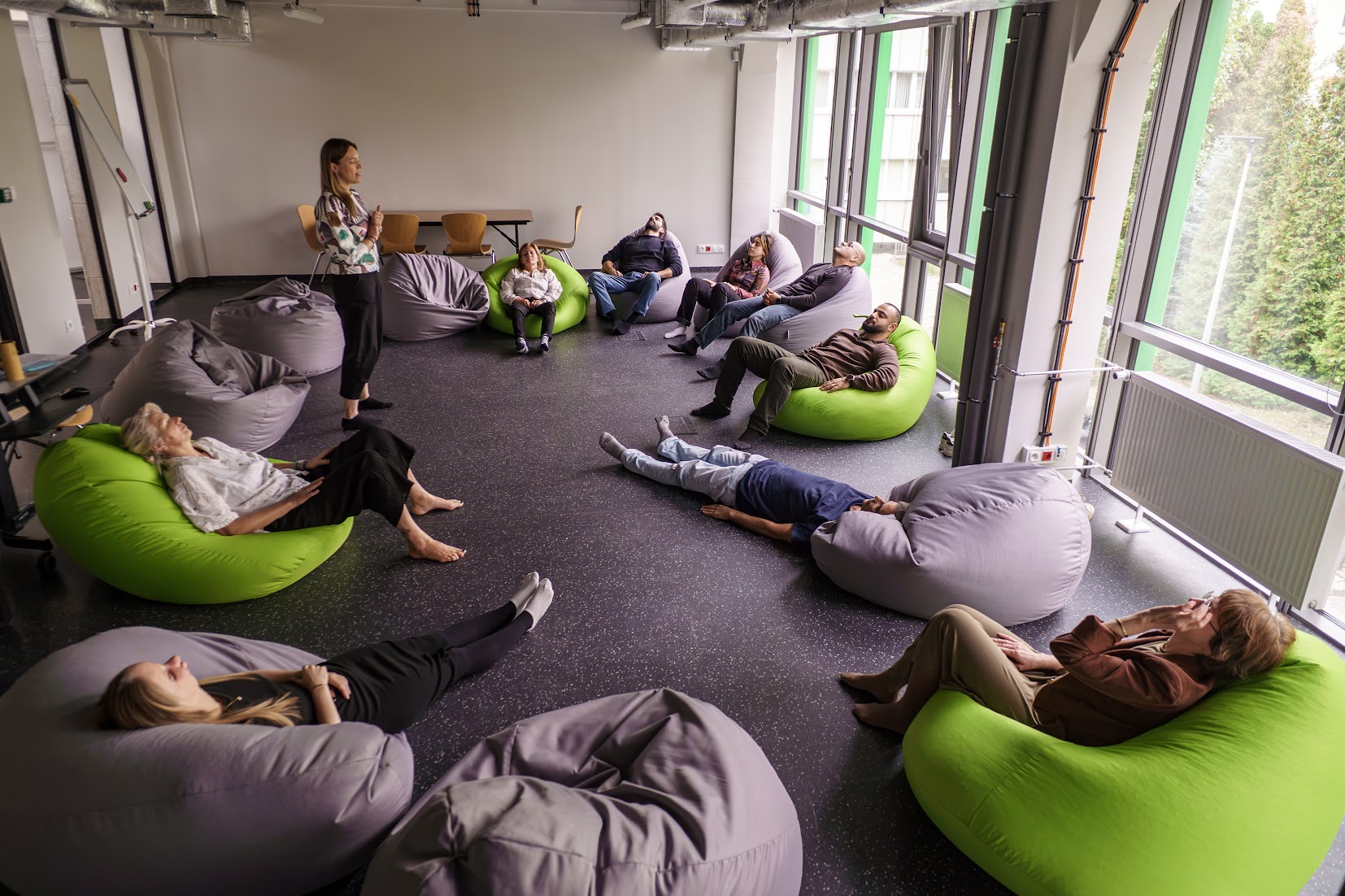
The project will develop virtual reality applications designed to help users relax, reduce stress, and better understand others. A mobile app will also be created, offering a kind of “first-aid kit” containing short exercises for moments of heightened tension. Other initiatives will include training courses, educational materials, and quiet zones on campus. These resources will be available to students, doctoral candidates, academic teachers, and administrative staff.
Crucially, the initiative is intended to go beyond the development of applications alone. All the solutions are to become a permanent part of the University’s support system and remain available after the project has ended.

The project is being conducted by the Voxel Research Lab at the Institute of Mechatronics and Information Systems of Lodz University of Technology. The team already has relevant experience: through the VRXanny project, it demonstrated that virtual reality can help students reduce stress and anxiety, while the Mr. UD project showed that VR can promote a better understanding of the needs of people with disabilities.
Another key partner is the University’s Academic Support Zone Office, which provides day-to-day assistance to students and staff experiencing difficult situations. The researchers contribute their technological expertise, while the Office’s specialists bring experience in supporting people.
The solutions will be developed jointly with their intended users. Small-group meetings will begin shortly, during which students and staff will discuss the challenges they face in their everyday lives.