


What makes thermophilic microorganisms unique?
They can survive and grow at high temperatures, often higher than those tolerated by other forms of life (45–55°C). Examples include cyanobacteria, which I work with as part of E2Top. They can be found in ecological niches such as hot springs, extreme aquatic and terrestrial ecosystems (e.g., sediments of volcanic lakes, specific hydrothermal niches).
What are carotenoids?
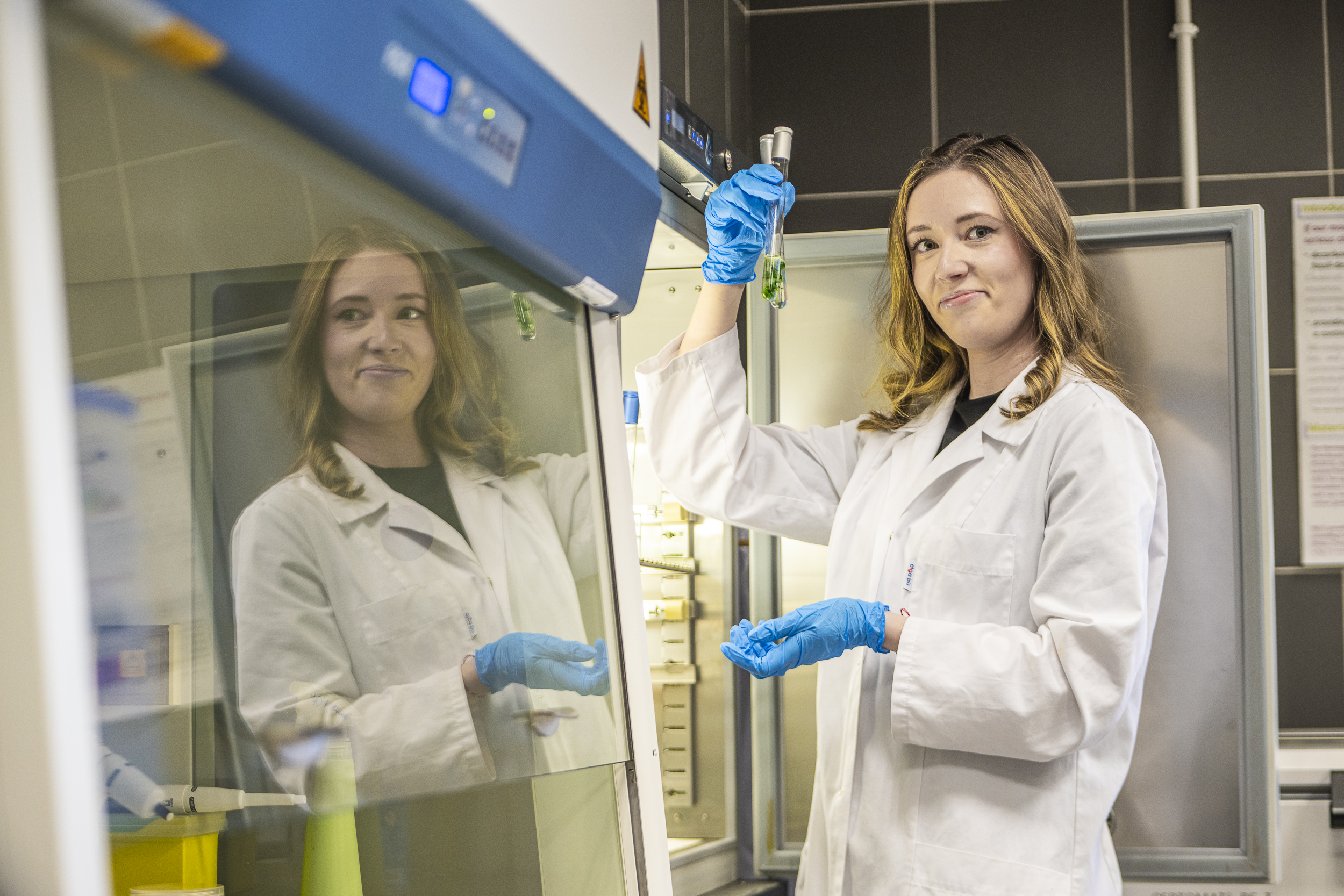
Carotenoids are pigments that are insoluble in water but dissolve in fats. Over 600 different carotenoid structures have been identified in nature. Their chemical structure—specifically the chain configuration—determines their color. They can range from purple to red, orange, and yellow. Carotenoids are divided into carotenes (e.g., the well-known beta-carotene) and xanthophylls (e.g., lutein). Biologically, they are responsible for capturing light energy, providing photoprotection by neutralizing reactive oxygen species, and helping maintain stable cell structures. In industry, carotenoids are used as natural colorants in food, animal feed, and cosmetics.
Do they act as a natural protective shield?
Yes. They play a key role in protecting organisms from environmental factors, including heat and radiation.
Can thermophilic microorganisms become a new ecological source of pigments?
Yes, they are promising as a source of pigments that could replace harmful synthetic substances. Synthetic dyes are based on petroleum derivatives and are harmful to the environment. Producing pigments from thermophiles has the potential to be a sustainable process. Additionally, natural pigments have valuable properties for industrial use—they are thermally stable and offer a wide range of colors. They are also safe for health and biodegradable; some even exhibit beneficial properties such as antioxidant and anti-inflammatory effects. The main challenge remains the high cost of producing pure pigments. Nevertheless, this is a green alternative to synthetic pigments worth developing, especially as consumer ecological awareness and environmental regulations increase.
Where could such natural carotenoids be used?
In the food industry, they can be used in the production of juices, beverages, butter, margarine, and cheese. They can serve as functional additives, helping maintain color and flavor. Beta-carotene, for example, is a precursor of vitamin A and can be used as a dietary supplement.
The cosmetics industry is also increasingly turning to natural alternatives. Carotenoids are used in sun protection, have anti-aging properties, and are ingredients in regenerating and moisturizing creams. They are also added to poultry feed and used in aquaculture—these are the main areas of application. There are also innovative industrial uses, such as eco-friendly textile dyes and alternative bio-based paints and inks.
From your perspective, what is the greatest benefit of participating in E2Top?
Above all, I am very grateful for the opportunity to work with Anna Klepacz-Smółka,PhD. She shared knowledge, experience, and skills she had developed over many years. Thanks to this, I learned a great deal about laboratory work, gained confidence, and understood that mistakes are a natural part of learning.
The project also opened many opportunities related to scientific travel and getting to know other research centers. The most significant experience, however, was a research internship in Taiwan. I had the pleasure of joining a research team at National Cheng Kung University—one of the top universities in the world. This experience gave me great confidence and the feeling that I can handle any situation.
I believe that participating in E2Top greatly helped me organize my thoughts about what I would like to do in the future.
Interview by: Agnieszka Garcarek-Sikorska