
What does engineering education involve today?
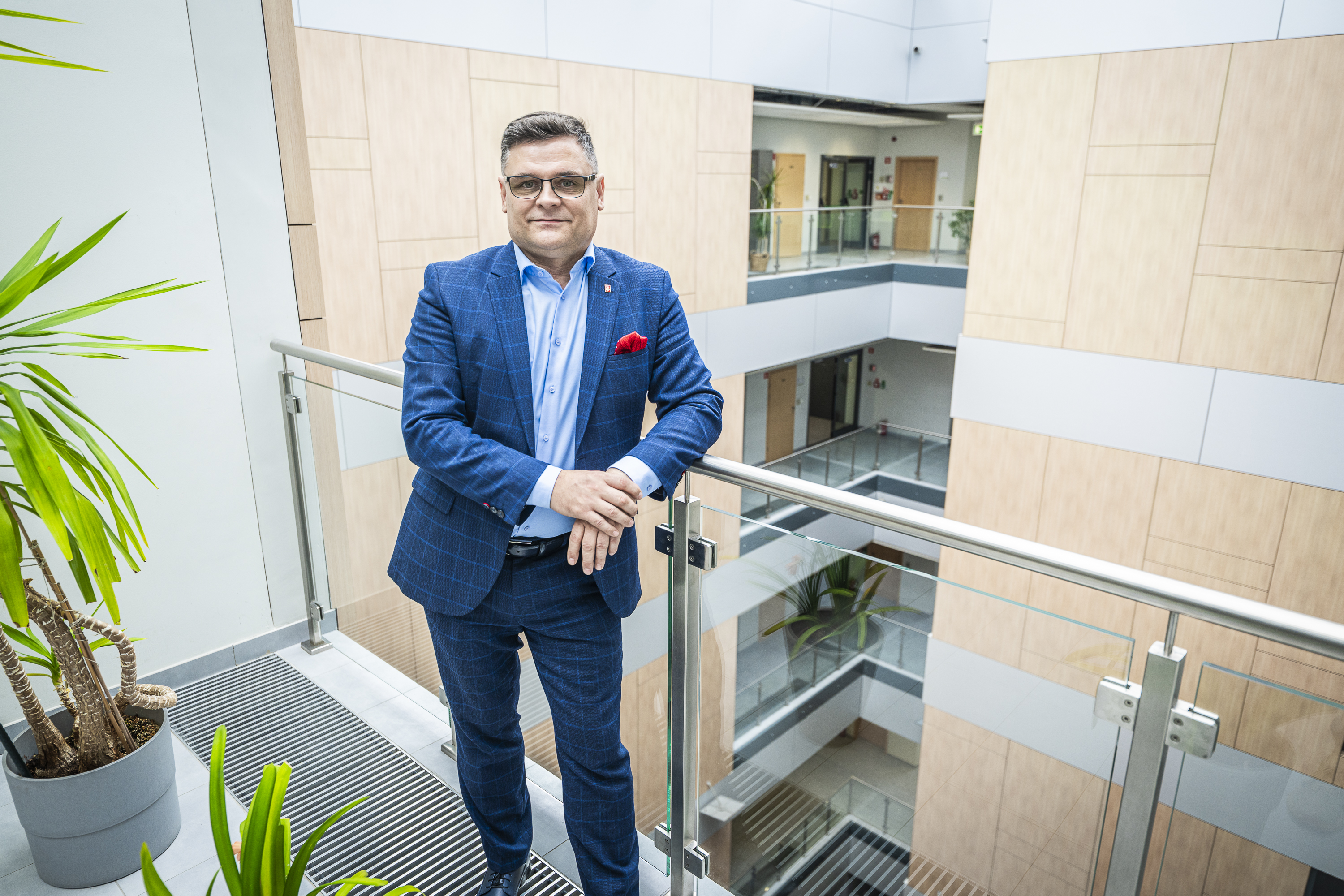
Prof. Jacek Sawicki: An engineer's most important competence is the ability to solve problems they have not encountered before. Technologies are developing very quickly, so our graduates must be able to analyse a situation, search for information, propose solutions and verify how effective they are. Alongside a solid theoretical and technical foundation, the ability to cooperate with people from different fields and sectors is becoming increasingly important.
Today, mechanical engineering does not function in isolation from other areas. It is linked with computer science, automation, electronics, materials science, data analysis and medicine. That is why we want students of the Faculty of Mechanical Engineering to be able to communicate and work in interdisciplinary teams. In practice, an engineer must be able to communicate not only with other engineers, but also with doctors, biotechnologists, physiotherapists and specialists responsible for implementing new technologies.
How does the Faculty respond to these needs?
A good example is the Dental Technology programme, run jointly with the Medical University of Lodz. It brings together medical knowledge, digital design, materials science and modern manufacturing technologies. A dozen or so years ago, such combinations seemed unusual. Today they are part of everyday life and help improve people's quality of life and health.
Our researchers have many successes in using mechanical and materials engineering effectively in medicine.
Faculty staff conduct research in biomechanics, medical device design, dental technologies, load modelling and 3D printing.
Today, modern additive technologies are used not only to make prototypes, but also to prepare anatomical models and solutions tailored to the needs of individual patients. Such projects could not be developed without close cooperation between doctors and engineers. To name just a few: the miniature orthopaedic measuring arm NaviFast6D, a non-invasive diagnostic system for knee injuries, a safe method of producing material for an air filter in a tracheostomy tube, and functional 3D printing materials for urology.
The importance of this cooperation is symbolised by Prof. Jacek Moll, Doctor Honoris Causa of Lodz University of Technology, a graduate of our Faculty and an outstanding cardiac surgeon. It is no exaggeration to say that his pioneering heart valve solutions for children were based on knowledge of mechanics.
How can such cooperation be developed?
Joint work by researchers from Lodz University of Technology and the Medical University is also supported by an award from the rectors of both universities for authors of interdisciplinary research. It reflects the belief that the greatest breakthroughs often happen where different fields of knowledge meet.
Can we say that openness to the external environment is also a driving force?
Cooperation with companies is standard for us, and we understand very well that it benefits both sides. Through our contacts with companies, we can better understand where technology is heading and the challenges facing the economy. In turn, our industrial partners benefit from the knowledge of experts, from our laboratories, and from the potential of students and young researchers. This cooperation also produces implementation-oriented diploma projects that respond to our partners' specific needs. Although the details of many projects remain confidential, they cover areas such as medical applications, machine safety, materials technologies, energy efficiency and sustainable development.
The Faculty's experts support companies not only by running research projects. They also provide expert opinions, laboratory testing, design work, computer modelling, prototyping and training for company employees.
Could you give some specific examples?
One such platform for dialogue is the Council of Visionaries of the Faculty of Mechanical Engineering, which brings together representatives of companies and institutions. Its meetings make it possible to discuss technological change and the competences that future engineers will need. The conclusions from these discussions are then reflected in diploma project topics, work placement and internship programmes, the range of courses on offer, and the development of curricula.
The Office of Technical Inspection (UDT), which has its premises at the Faculty, is also a particularly valuable partner. Our close cooperation makes it easier to organise seminars and joint activities in technical diagnostics, risk analysis and the safe operation of equipment.
Industry Day also plays an important role. During this event, company representatives present their technologies, career development opportunities, and work placement and internship offers. It gives students the chance to talk directly with potential employers, and it is also an opportunity to make new research contacts. At every Faculty inauguration of the academic year, one of our graduates gives a talk about their career after receiving their TUL degree.
What opportunities are being created for students of the Faculty of Mechanical Engineering?
Students learn through challenges, working on real technical problems and designing solutions for specific users. They have access to professional technical and technological facilities, and to work placements and internships at companies that cooperate with us. This is very often the start of their careers, which they continue successfully after graduating.
Student research clubs also play a special role. Students design, build and test solutions on their own, learning teamwork and responsibility for the decisions they make. This kind of experience is gained by members of the Lodz Solar Team, the Iron Warriors team, the GUST group and the student 3D printing club, among others. We are proud to showcase their innovations and the international successes they achieve when competing against teams from other universities.
The Mechaton competition is also practical in nature. During the competition, participants have 48 hours to develop solutions to problems submitted by companies. It’s an intensive lesson in teamwork, creativity and working under time pressure.
Agnieszka Garcarek-Sikorska