A key component of the programme for both groups was a hackathon designed and prepared by the Student Scientific Association for Commercialization, Development and Technological Evolution “KONKRET”, operating under the supervision of Julian Leszkowicz. The initiatives were carried out in cooperation with the Lodz Special Economic Zone as part of the Startup Spark initiative. Substantive support from the ŁSSE was provided by Magda Kubicka (Director of the Innovation Department), Anna Kądzielewska, Ewelina Radke-Witczak, and Przemysław Nowakowski.
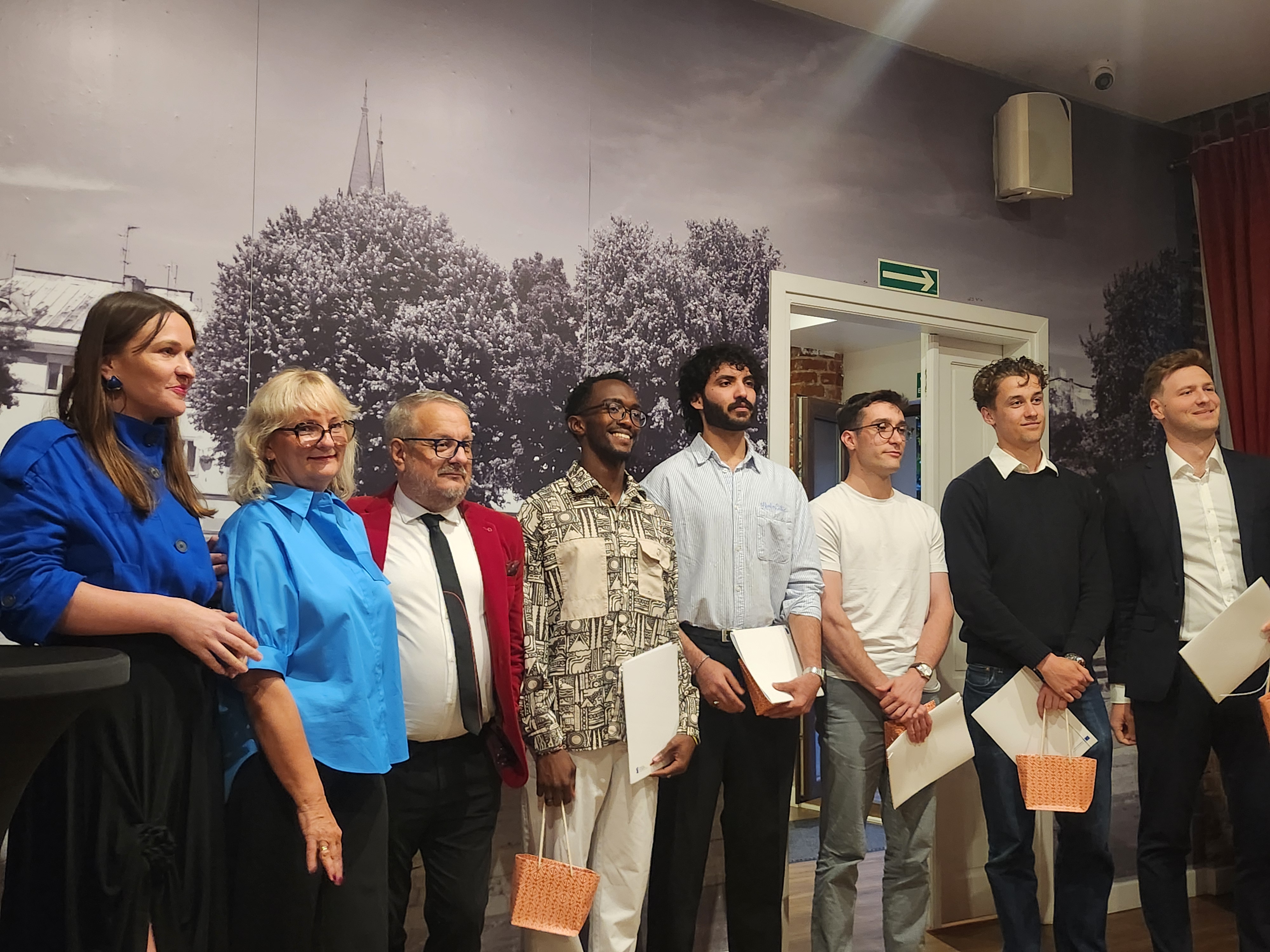
Award presenters: Magda Kubicka, Agnieszka Pietras, Sebastian Bakalarczyk; winning team (from left): Shem Githinji Maina, Abdullah, Cabale Tadzio, Lukas Gottschalk, Michał Gruszka during the award ceremony
Photo: BIP 2026 participants’ archive
Students worked on four innovative startups from various industries: DeepWhale – AI solutions for psychotherapy; CyberRange – a training platform for cybersecurity; Bu Composite – eco-friendly construction materials made from recycled components; Patient Expert – a platform improving access to medical services.
In addition to the organizing team, students’ work was supervised by professors from Ukraine: Olena Prokhorenko, Pavlo Brin, and Oleksandr Gurko.
Participants were randomly divided into teams and worked on analyses and development roadmaps for startups participating in the Spark 3.0 acceleration programme. Their task was to conduct a comprehensive digital maturity audit, including analysis of processes, technologies, data management, and team competencies. Based on this, students developed concrete recommendations covering both quick wins and long-term development strategies. Each team prepared a strategy addressing technological development, business scaling, potential international expansion, and funding opportunities.

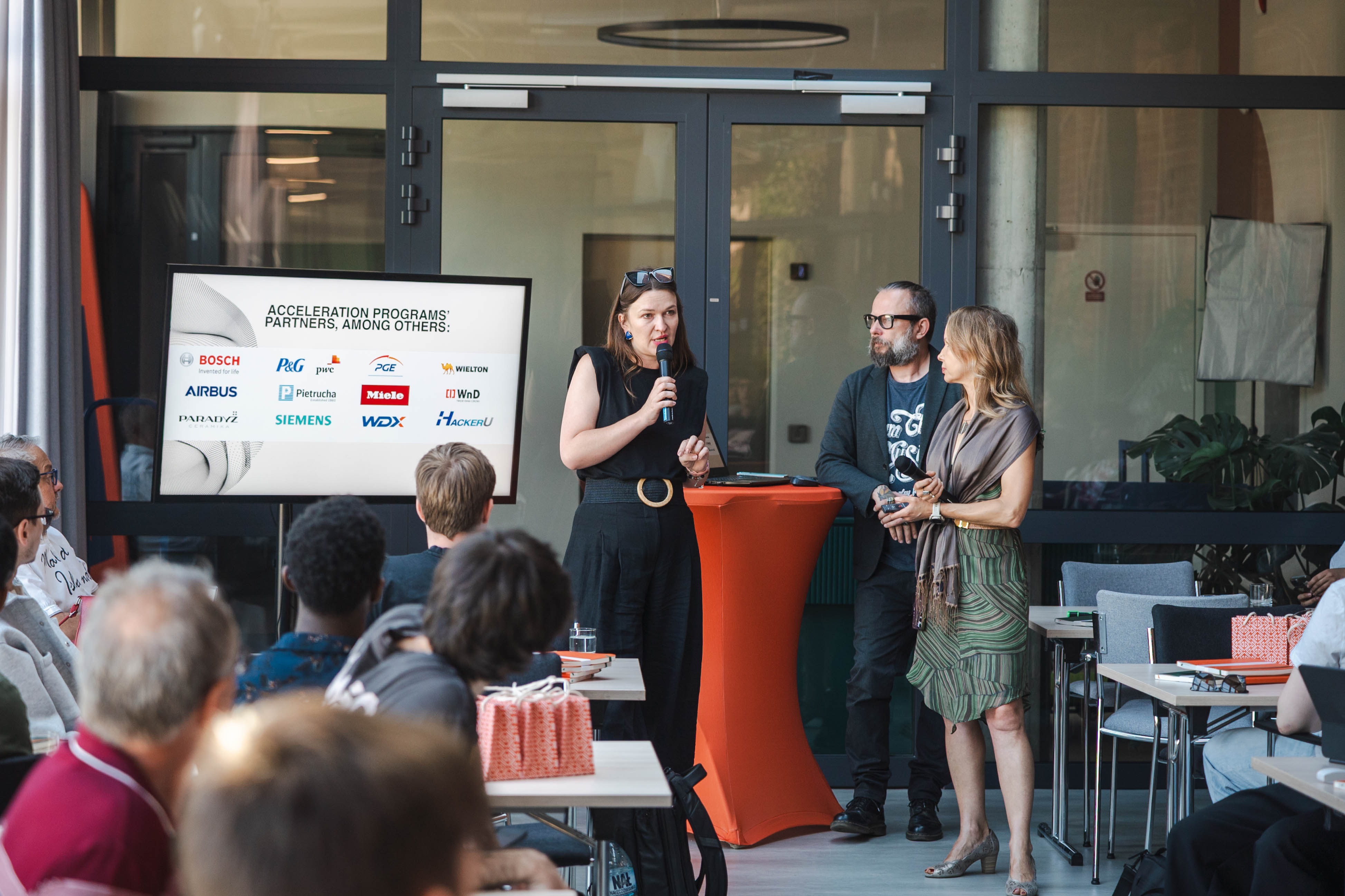
BIP participants during the hackathon introduction
Photo: BIP 2026 participants’ archive
The work was fully practical in nature—teams conducted interviews with founders and company employees, analyzed real data, and developed implementable solutions. The programme culminated in presenting results in the form of professional presentations before a jury composed of representatives from the ŁSSE—Magda Kubicka (Chair), Anna Kądzielewska, Ewelina Radke-Witczak, Przemysław Nowakowski—and from Lodz University of Technology— Sebastian Bakalarczyk, PhD, Radosław Gajewski, PhD and Julian Leszkowicz.
One of the most important aspects of the programme was working in international teams. Students emphasized that the diversity of experiences and perspectives significantly improved the quality of the solutions developed. Participants also had the opportunity to develop strategic competencies through business simulations and consultations with mentors and industry experts.
The programme concluded with a presentation competition, during which teams presented their recommendations in a format resembling a board meeting. The best projects were awarded during a gala held at Stare Kino in Lodz, and all participants received certificates confirming the award of 3 ECTS credits.
For many participants, the programme was not only an educational experience but also an opportunity to explore Lodz—a city with a rich history and dynamic transformation that reflects the themes of digital transformation and innovation. Participants took part in a city tour professionally guided by Joanna Łabęcka and Max Broy. They also received a guide to Piotrkowska Street, participated in a campus tour organized by the Welcome Point, and visited the Faculty of Organization and Management.
The organization of the BIP once again demonstrated how effective collaboration between universities, business, and economic environment institutions can be. Academic knowledge combined with real business challenges enables students to gain practical competencies and prepares them for work in a dynamic business environment.
As participants emphasized, the greatest value of the programme was not only the skills acquired but also the relationships built, the experience of working in international teams, and the opportunity to have a real impact on the development of innovative ventures.
The BIP programme at Lodz University of Technology is an example of modern education, where theory meets practice and students become partners in solving real business problems. We extend our sincere thanks to the students of Lodz University of Technology: Michał Gruszka, Ernest Kmieciak, Natalia Latkowska, Hanna Milczarek, Hanna Piech, and Łukasz Sobanty for their commitment, participation in the hackathon, team collaboration, and for explaining the specifics of how Polish startups operate.