

habilitated doctor in chemical sciences
priority research area: MoleculeTech
Scientific achievements
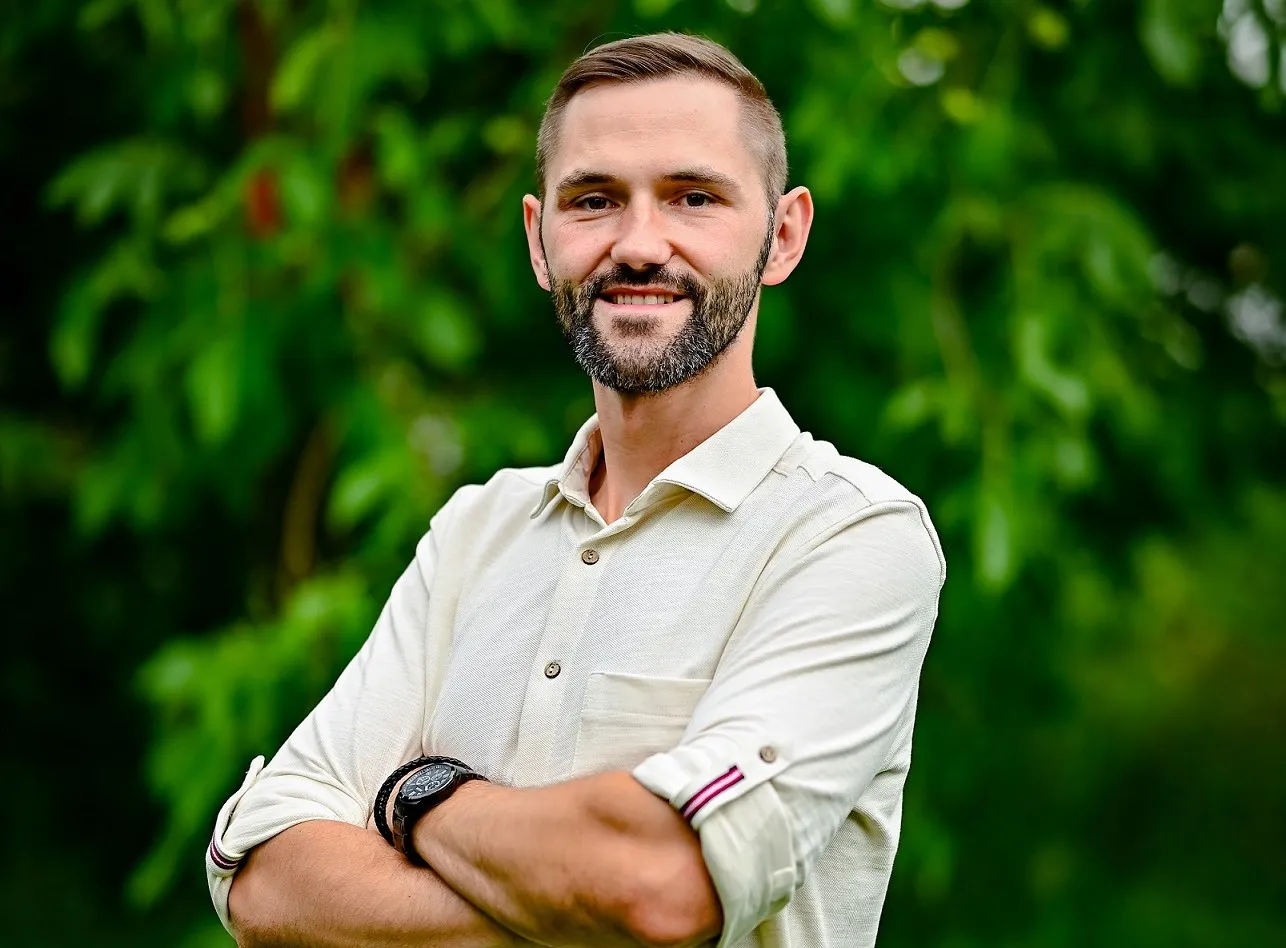
Dr Hab. Eng. Bartosz Sekuła, Professor at Lodz University of Technology, from the Faculty of Biotechnology and Food Sciences, is a specialist in structural biology, protein crystallography, and research on the structure and function of enzymes involved in arginine and polyamine metabolism. His scientific output includes 29 publications listed in the JCR. In 2017–2021, he completed postdoctoral fellowships at the National Cancer Institute in the USA, where he conducted research using X-ray crystallography and cryo-electron microscopy.
Research profile and research directions
His scientific interests focus on the mechanistic characterization of arginine and polyamine metabolism in plants and the use of enzymes from these pathways as molecular targets for new plant protection agents. Professor Sekuła applies protein crystallography, bioinformatics, and molecular modelling to describe enzyme structures, conformational variability, and ligand interactions at the atomic level.
Among his most significant achievements is the determination of the structure of plant ornithine transcarbamylase, the molecular target of phaseolotoxin produced by Pseudomonas syringae. This research explained the mechanism of enzyme inhibition during plant infection and indicated new possibilities for designing selective inhibitors with potential application as herbicides. The work was awarded the Crystallographic Diamond by the Committee of Crystallography of the Polish Academy of Sciences for the best publication in biological and medical crystallography.
Honours and recognition from the scientific community
Dr Hab. Bartosz Sekuła led an NCN SONATA project focused on structural and functional studies of plant enzymes involved in arginine metabolism as molecular targets for designing new plant protection agents. In 2026, he will start an NCN SONATA BIS project devoted to the role of polyamine metabolism in interactions between plants and endophytic bacteria. In 2025, he established cooperation with Molecure on the potential use of arginase inhibitors in designing new molecules for controlling weeds and invasive plant species.
His scientific activity has a strong international dimension. He regularly uses synchrotron research infrastructure in Europe and the USA, including facilities in Berlin, Hamburg, Lund, and Argonne, and his team has deposited numerous protein structures in the Protein Data Bank. He also collaborates with the National Cancer Institute, Sapienza University of Rome, and the University at Albany in the field of amino acid metabolism proteins, one-carbon metabolism, and Lon proteases. He is a laureate of the Crystallographic Diamond of the Committee of Crystallography of the Polish Academy of Sciences, the Polish Synchrotron Radiation Society Award for his doctoral dissertation, and the Polmos Żyrardów Award for the best doctoral dissertation.