
Communicational barriers, lack of sign language interpreters, and insufficient staff training all mean that Deaf learners must put forth additional effort in order to take part in what for others is a standard academic life experience. At the same time, it is clearly visible that Europe is beginning to change direction. The problem is that this change is proceeding at an uneven pace. What in one country becomes the norm still remains an exception in another.
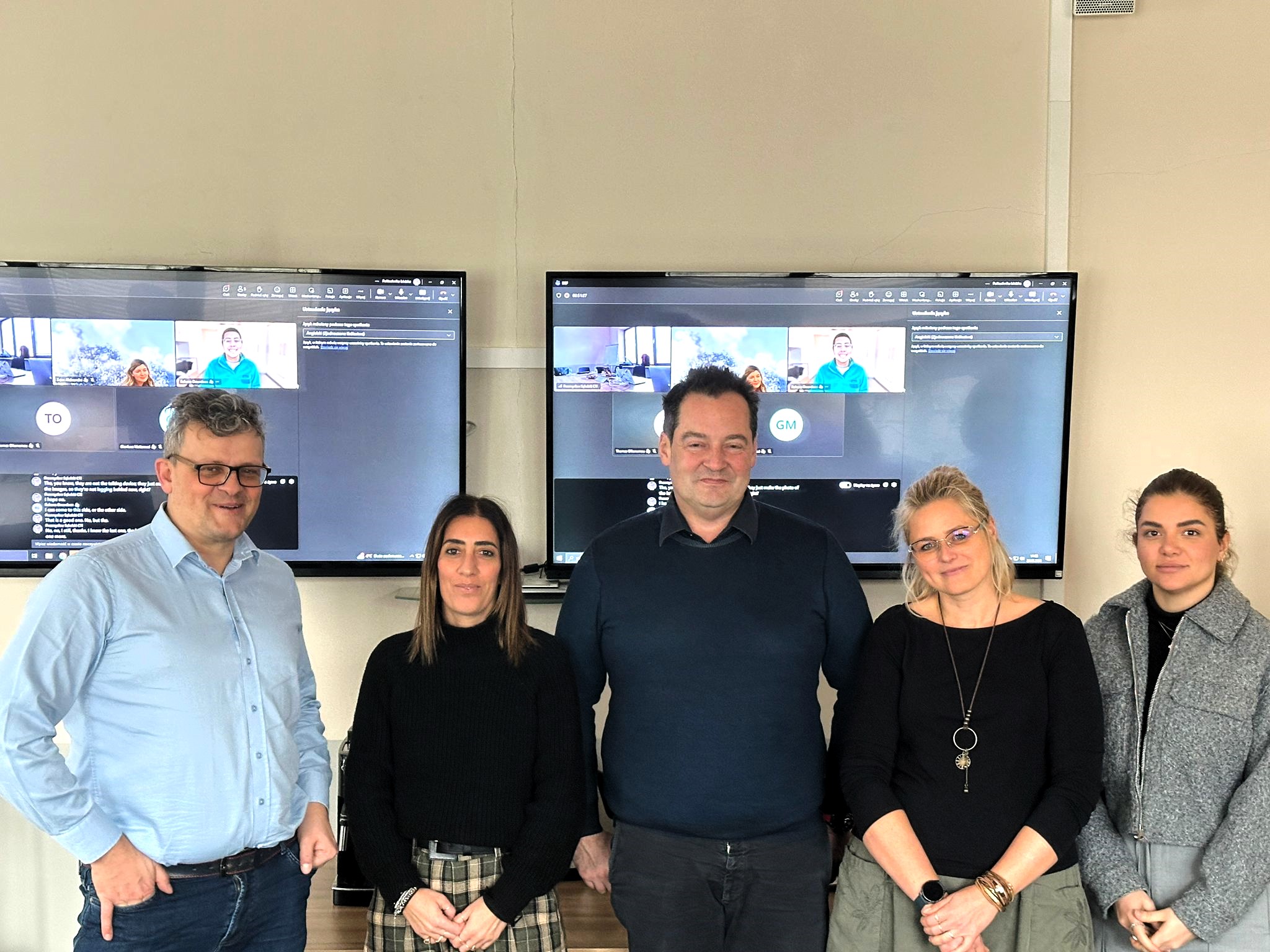
The response to these challenges is the D.E.F. – Deaf Entrepreneurs for the Future – project, implemented among others by Lodz University of Technology. This initiative responds not only to the needs of Deaf and hard of hearing people, but does so in a modern and thoughtful way. Its aim is to create digital entrepreneurship education designed from the outset to be fully accessible to Deaf learners.
The project creators proceed from the assumption that accessibility is not an add on, but a foundation on which the entire process is built. In practice, this means producing educational courses that from the very beginning take into account diverse ways of receiving content, communicating, and (co )participating in the learning process. These courses will not rely solely on spoken language, but will also employ visual communication, clear content structure, and interactive solutions that support different learning styles.
Specialized units of Lodz University of Technology are involved in the project. The Information Technology Centre is responsible for the technological side, while the Academic Support Zone at Lodz University of Technology (formerly BON) ensures that every element of the course meets high accessibility standards. The consortium is led by the University of Rome Tor Vergata, and among its partners are, among others, Społeczna Akademia Nauk, the European Union of the Deaf, the European Association of Erasmus Coordinators, and the Italian firm Falco & Associati.
The outcome will be not only an e learning course, but an entire ecosystem of tools: a compendium of knowledge, an online educational space, and a community supporting the development of entrepreneurship among Deaf and hard of hearing people. Importantly, these solutions are designed to be universal. They may become an inspiration and support also for other areas of education, helping universities to build more accessible learning environments.
The D.E.F. project fits into a broader European trend in which inclusion stops being just a slogan and becomes a standard.
Joanna Sztobryn Giercuszkiewicz, Head of the Academic Support Zone at Lodz University of Technology